
Computer Science Assignment Help: What Students Actually Need

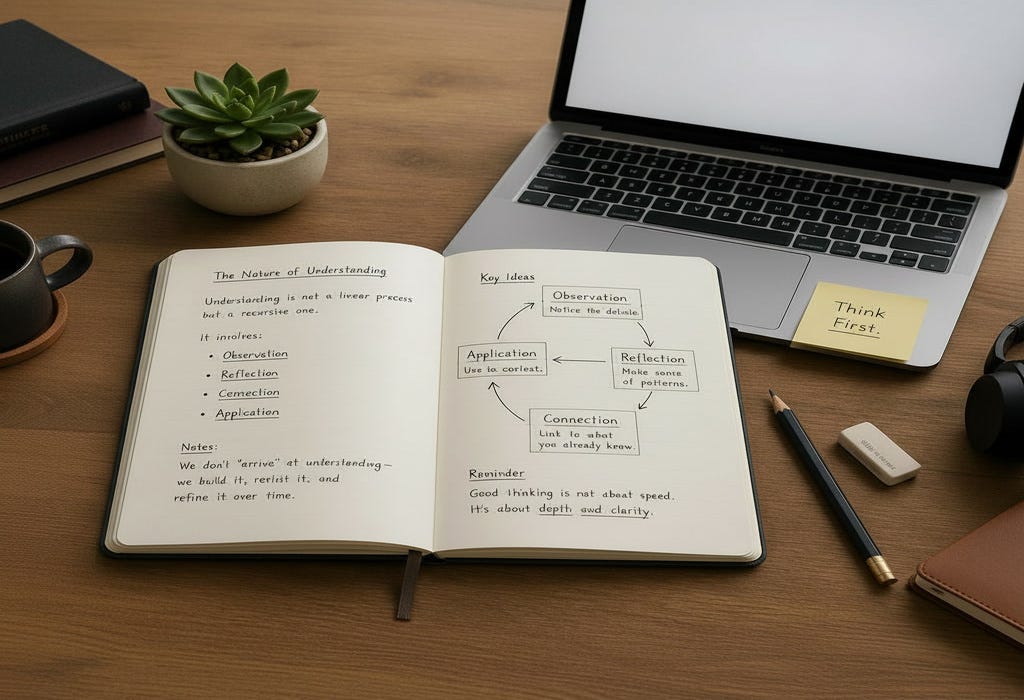
Understanding isn't a linear process it's built, revisited, and refined over time.Hi everyone,
I’ve been thinking a lot lately about why so many computer science students struggle, even after they’ve learned the basics of programming. The more conversations I read, the more I become convinced that most students are solving the wrong problem.
They spend hours memorizing syntax. They drill keywords. They practice writing loops and conditionals until they can do them in their sleep. And then they sit down to complete an assignment and realize none of it prepared them for what actually matters.
Today’s edition explores why problem-solving skills matter much more than memorizing syntax. I’ll share what actually helps students build confidence, why debugging is more important than getting it right the first time, and how the habits developed in computer science assignments transfer to almost every other area of life.
Let’s get into it.
Why Memorizing Code Isn’t Enough
Walk into any introductory programming lecture and listen to the conversations before class starts. Students huddle around laptops, comparing error messages. They ask each other whether a semicolon belongs inside or outside a closing parenthesis. Someone mutters about forgetting whether it’s len() or .length().
The assumption runs deep. If they could just memorize the syntax, everything else would fall into place.
That assumption is understandable. It is also wrong.
Syntax is a surface feature. You can internalize conventions through practice. The real difficulty lives somewhere else entirely. It lives in the quiet work of breaking messy problems into orderly steps, recognizing patterns across unrelated challenges, and tracing logic as it actually executes.
Here’s something I’ve noticed: students who struggle most are rarely the ones who forget a semicolon or mix up == and ===. They are the ones who stare at a blank editor, unsure how to begin. They know how to write a loop but do not know when to write one. They can instantiate a class but cannot decide what that class should do.
Developing analytical habits matters more than learning any particular language. The language is just the vehicle. The destination is a new way of approaching problems.
Why Computer Science Assignments Feel Different
Computer science assignments have a brutal honesty about them. In a literature seminar, a weak thesis might still earn partial credit. In programming, a single logic error can render an entire program inoperable.
There is no partial credit for a function that almost sorts the array.
One incorrect comparison. One off-by-one error. One variable reassigned at the wrong moment. Any of these can break everything. This all-or-nothing reality can feel harsh, but it teaches something valuable. Precision matters. Attention to detail matters. Every line of code has a purpose, and every mistake has a cause.
Reading code is also harder than writing it. When you compose from scratch, you hold the entire mental model in your head. You know which variables are supposed to contain which values. You understand why each conditional branch exists. When you return to that same code hours later, the intention is no longer self-evident. You must reconstruct the reasoning from the structure alone. This interpretive work consumes far more mental energy than the original typing.
Programming also demands an experimental mindset. In physics, you test a hypothesis about the natural world. In programming, you test your hypothesis about what the code will do. The feedback loop is immediate. You run the code, see the result, adjust your thinking, and try again.
This cycle can be humbling. It can also be incredibly satisfying when things finally click.
The Gap Between Knowing and Understanding
Memorizing syntax is necessary. It is just not sufficient.
Think of it like learning a foreign language. You can know a thousand vocabulary words and still struggle to construct a coherent argument. You can recite every grammar rule and still fail to hold a meaningful conversation.
Programming is the same. You can recite every Java keyword and still stare blankly at a problem about building a simple calculator or creating a to-do list app.
What I’ve come to appreciate is that real assignments test reasoning, not recall. They present scenarios that require you to recognize underlying structures. A scheduling problem might require organizing tasks efficiently. A data validation task might require checking input carefully.
Students who focus exclusively on syntax miss these deeper connections. They learn how to write code but never ask why certain approaches work better than others.
The student who cultivates strong problem-solving habits begins with questions instead of code. What am I trying to build? What steps are involved? What could go wrong?
These questions lead to insight. Syntax simply records the answer.
What Actually Builds Real Skills
This fundamentally changes how we think about assignments. Students need more than correct outputs. They need a framework for approaching problems methodically across languages and contexts.
Logical thinking develops through deliberate practice. Tracing execution step by step, articulating what happens at each stage, builds mental muscles that no textbook can transfer directly. It feels tedious at first, but the act of manually working through a problem forces your brain to construct a model of how the program operates. Eventually, you can anticipate behavior without running the code.
Breaking problems down is another skill that takes time to develop. Large assignments overwhelm because they present a single big goal. Build a calculator app. Create a simple game. Design a small website. Students who panic have never learned decomposition. They do not see that a calculator divides into input, computation, and display.
Each piece is manageable on its own. The connections between them provide structure.
Understanding error messages is one of the most neglected skills. Error messages contain valuable information, but only for those who read them carefully. A null pointer exception is not a mystery. It signals that something was missing. A syntax error tells you exactly where the mistake is. A logic error means your thinking needs adjustment.
Students who treat error messages as opportunities to learn transform frustration into insight.
Small Habits That Make a Big Difference
Some habits make learning programming significantly easier. Others make it unnecessarily difficult.
Copying code without understanding it is perhaps the most damaging habit. A student who pastes a solution from somewhere else may complete the assignment, but they have learned nothing. When the next assignment differs, they cannot adapt.
Ignoring warnings compounds difficulty. Warnings are not errors. They do not stop your program from running. But they often signal potential problems. An unused variable might mean dead code. A missing check might mean a future bug.
Skipping small tests creates problems down the line. When you write a lot of code before testing anything, you create a debugging nightmare. Errors could be anywhere. When you test small pieces as you go, problems are easy to find and fix.
Avoiding backups leaves you vulnerable. A corrupted file or accidental deletion can erase hours of work. Simple backups provide a safety net.
Leaving everything to the last minute is a pattern I see constantly. Starting early gives you time to let problems sit, step away, and return with fresh eyes. Starting late means rushing, making careless errors, and resorting to desperate measures.
Finding Support That Actually Helps
One thing I’ve noticed over time is that many students hesitate to ask for help because they think it means they’re falling behind. In reality, the right guidance often makes people more independent rather than more dependent.
When students seek outside help, they face many options. Some promise quick solutions. Others offer tutoring. Still others provide explanations and guidance.
The choice matters. The wrong kind of help undermines learning. The right kind accelerates it.
Good guidance focuses on concepts rather than completed code. A tutor who walks through the reasoning behind a solution is more valuable than one who simply types out the answer. The goal is not to finish faster. The goal is to finish the next assignment without assistance.
Help that builds understanding creates independence. Help that provides answers creates dependence.
Good guidance teaches diagnostic techniques. Instead of telling you which line to change, a good tutor guides you through finding it yourself. What did you expect to happen? What actually happened? Where might that difference come from? This questioning style models the internal dialogue that skilled learners maintain automatically.
That naturally leads to another consideration. When students compare different academic resources, they might come across platforms offering programming assistance alongside tutoring and guidance. The more important question is not which provider they choose, but whether the guidance helps them understand the reasoning behind the solution. The quality of the explanation matters far more than the name on the website.
Every Programmer Starts as a Beginner
Nobody writes perfect code the first time. Not the experienced developers you admire. Not your professors. Not anyone.
Everyone gets error messages. Everyone has moments where nothing seems to work. Everyone has stared at a screen wondering why a simple program refuses to run.
Mistakes are not signs of failure. They are signs of learning.
Confidence develops gradually. Each bug you fix adds a little more understanding. Each assignment you complete adds a little more skill. Progress matters more than perfection.
The best programmers are not the ones who never make mistakes. They are the ones who keep going when things do not work.
Building Confidence One Assignment at a Time
Every programming assignment offers a chance to grow. Not just as a coder, but as a problem solver and a learner.
Consider a student working on a simple calculator. The code compiles. The basic operations work. But one test case produces a strange result. The student spends time searching for the issue. They check for obvious mistakes. Everything looks fine.
Then they notice the logic. The program divides by zero when the user enters zero as the second number. The code was syntactically perfect. But the logic was flawed.
This happens constantly. Not because the student lacks knowledge, but because they did not fully think through what could go wrong. Fixing it taught them something important about checking edge cases.
Each assignment, each bug, each moment of frustration teaches patience. It teaches humility. It teaches perseverance.
Beyond the Assignment
The lesson goes beyond programming.
The skills developed through computer science assignments extend far beyond the classroom. Problem solving. Patience. Attention to detail. Breaking complex tasks into manageable pieces. Learning from mistakes. Asking better questions.
These abilities matter in every field. They matter in every career. They matter in everyday life.
Technology changes rapidly. Languages rise and fall. Frameworks appear and disappear. The specific syntax and libraries learned in school become obsolete. But the ability to learn new systems, adapt to new paradigms, and solve novel problems never expires.
What I’ve come to appreciate most is that these skills stay with students long after graduation. The specific languages they learned might fade, but the habits of mind remain.
Conclusion
There is a quiet moment that comes to every student learning programming. They have been staring at a bug for hours. Increasingly frustrated. Convinced the assignment is impossible.
Then, suddenly, they understand.
The mental model was slightly wrong. They misread something. They assumed something that was not true. They fix the code and it works. Everything clicks.
In that moment, the student has moved beyond merely fixing a programming problem. They have gained insight into their own thinking. They have discovered the value of patience and systematic reasoning. They have encountered firsthand the difference between knowing and understanding.
That moment is what learning computer science is actually about. A grade captures a single data point. The transformation in thinking carries lasting value.
Students who recognize this deeper purpose find their coursework more meaningful. They do not just learn to code. They learn to think.
If there’s one idea I’d like you to remember from today’s edition, it’s this: programming becomes easier not because you memorize more syntax, but because you learn how to approach problems more clearly. The syntax will change. The languages will evolve. But the ability to think systematically will serve you for the rest of your career.
Thanks for reading.
If this edition resonated with you, consider sharing it with another student who might find it helpful. I’d also love to hear your thoughts.
What programming mistake ended up teaching you the most?
Reply in the comments or send me a message. I read every response.
See you in the next edition.